How Long Does It Take for Cuttings to Root? A Realistic Timeline by Plant Type
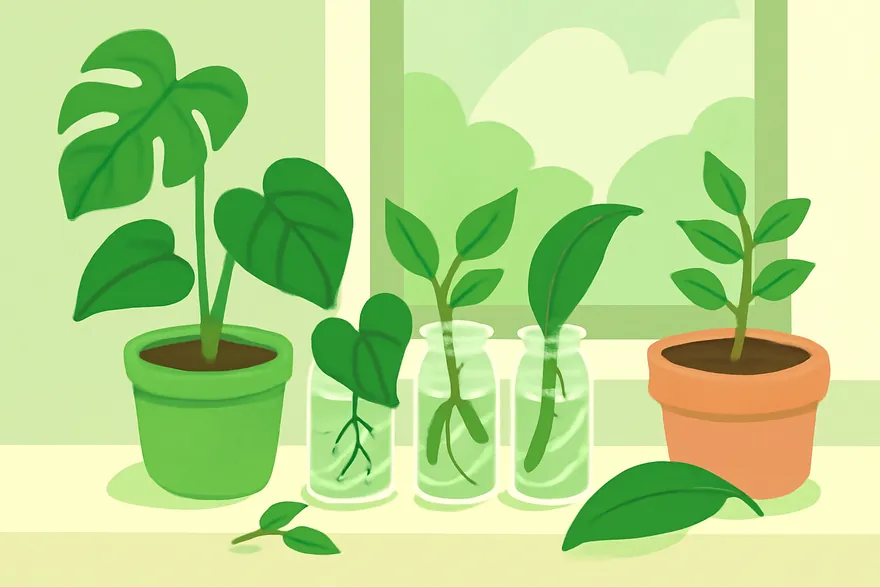
There is no single answer to "how long," because a stem cutting is not one product — it is dozens of different plants with different wood, different hormone levels, and different tolerances for stress. A pothos in a jar of water can grow visible roots in seven days. A Japanese maple hardwood cutting taken in winter can sit in a pot for three months and still be nothing but a bare stick with a few root hairs. Both are normal. What follows is the actual range you should expect, broken down by the variables that move the needle and by plant type, so you know when to be patient and when to intervene.
The Real Range: Two Weeks to Three Months
Most soft, herbaceous cuttings — the kind you take from houseplants and leafy herbs — root somewhere between one and three weeks under decent conditions. Semi-woody cuttings from shrubs like hydrangea or rosemary typically need four to eight weeks. Hardwood cuttings from trees and dormant shrubs are the slow end of the spectrum: six to twelve weeks is common, and some species do not finish rooting until they have gone through a full dormant season outdoors or in a cold frame.
The mistake most people make is applying houseplant expectations to woody plants. If you took a rose or fig hardwood cutting in late fall expecting pothos-speed results, you will pull it up at week three, see nothing, and assume it failed — when it may have needed ten more weeks.
The Four Variables That Actually Change the Clock
Temperature at the cut, not the room
Root zone temperature matters more than air temperature. Most cuttings root fastest between 70 and 75degF (21-24degC) at the base of the stem. A windowsill that feels comfortable to you but sits at 60-65degF can roughly double rooting time, because root initiation is a chemical process that slows with cold. A seedling heat mat under the tray or pot is the single most effective upgrade for anyone rooting cuttings indoors in a cool room.
Medium: water, perlite, or soil
Water rooting is popular because you can see progress, but roots grown in water are adapted to water and often sulk or stall for a week or two after being potted into soil — a step people forget to plan for. Perlite, coarse sand, or a perlite-coco coir mix root more slowly to the eye at first but produce sturdier roots that transition into soil with far less shock. Straight garden soil or heavy potting mix is the slowest and riskiest option because it holds too much moisture around the wound and invites rot before roots form.
Humidity and light
A cutting without roots cannot take up water through its base, so it survives on stored moisture and whatever it absorbs through the leaves. A humidity dome, a loosely tented bag, or misting reduces wilting stress and lets the plant put energy into growing roots instead of just staying alive. Bright, indirect light speeds rooting by keeping the plant's energy reserves topped up; direct sun on an unrooted cutting usually causes fatal wilting instead.
Wood type: softwood versus hardwood
Softwood cuttings (new, flexible growth) root fast because the tissue is young and still capable of rapid cell division. Semi-hardwood (partially firm, this year's growth) is slower. Hardwood (fully mature, often dormant) is slowest, because the tissue has to convert existing cells into root-producing cells rather than simply extending growth already in motion.
Timelines by Plant Type
Fast rooters: 1-2 weeks
- Pothos and philodendron — visible roots in water in 7-14 days at 70-75degF.
- Coleus — often shows roots in 5-10 days; among the fastest houseplants to propagate.
- Basil and mint — 7-12 days in water, though roots stay thin and benefit from a quick move to soil once they reach an inch.
- Tradescantia (wandering jew) — roots in 5-10 days, sometimes faster in warm weather.
Moderate: 3-8 weeks
- Rosemary — semi-hardwood tips typically take 4-8 weeks, faster with bottom heat and rooting hormone.
- Lavender — 4-6 weeks from semi-ripe cuttings taken after flowering.
- Hydrangea (softwood, early summer) — 3-5 weeks under a humidity dome.
- Fig (softwood) — 3-6 weeks in warm weather; hardwood fig cuttings taken in winter run much longer.
- Azalea — 6-10 weeks, slower than most broadleaf shrubs.
Slow: 8-14+ weeks
- Japanese maple (hardwood) — 8-12 weeks minimum, and success rates are modest even with hormone and bottom heat.
- Boxwood — 10-14 weeks; treat anything under two months as too early to judge.
- Camellia — 8-12 weeks, often needing a full season before transplant.
- Magnolia — notoriously slow and inconsistent; three months or more, with many growers reporting better results from layering than cuttings.
- Junipers and other conifers — 8-16 weeks, frequently needing wounding (scraping bark at the base) to root at all.
Commercial propagators who run this at scale generally build these same windows into their production schedules rather than checking daily — a detail worth borrowing if you are rooting more than a handful of cuttings at once.
Signs a Cutting Is Actually Rooting
You do not need to dig up or unpot a cutting to check progress. Watch for these signals instead:
- New leaf growth or an upright stem. A cutting that lifts itself back up after wilting, or pushes a new leaf, is drawing up water — which means roots have formed even if you cannot see them yet.
- Resistance to a gentle tug. After the minimum expected window for that plant type, lift the cutting very slightly. If it resists rather than sliding out freely, roots have anchored it.
- Visible white roots in water, ideally reaching half an inch to two inches before transplanting to soil — earlier than that and the roots are too fragile to survive the move well.
- No new black or mushy tissue at the cut end. This is not a sign of rooting itself, but its absence is a precondition — a rotting base will not root no matter how long you wait.
When to Worry — and What Usually Fixes a Stalled Cutting
If a cutting has gone well past double its expected timeframe with zero change, check three things before giving up. First, temperature — a cold windowsill is the single most common cause of a stalled softwood cutting, and moving it onto a heat mat often restarts progress within a week. Second, the base of the stem — if it is black, soft, or smells sour, it has rotted and will not root; discard it and try again with a fresh cut dipped in rooting hormone. Third, the cut itself — a stem that sat too long before being trimmed can callus over and seal itself off; a fresh diagonal cut just below a node, redipped in hormone, frequently succeeds where the original stalled.
Honest caveat: even under ideal conditions, some plants simply have low cutting success rates — magnolia and many conifers among them — and a failed attempt does not necessarily mean you did anything wrong. Take more cuttings than you need, expect a percentage not to root, and treat the timelines above as ranges to plan around rather than guarantees.
Quick comparison table for: How Long Does It Take for Cuttings to Root? A Realistic Timeline by Plant Type
| Section | What to check | How to use it |
|---|---|---|
| The Real Range: Two Weeks to Three Months | Match the conditions and warning signs in this section | Use as a quick practical checklist |
| The Four Variables That Actually Change the Clock | Match the conditions and warning signs in this section | Use as a quick practical checklist |
| Temperature at the cut, not the room | Match the conditions and warning signs in this section | Use as a quick practical checklist |
| Medium: water, perlite, or soil | Match the conditions and warning signs in this section | Use as a quick practical checklist |
Questions and answers
Why do cuttings of some plants root much faster than others?
The pace is mostly driven by cutting type and conditions. Softwood cuttings from new flexible growth root quickly because the tissue is younger and more active. Semi-hardwood is slower, and hardwood is slowest because mature tissue converts to root-producing cells more slowly. Temperature is also critical: a root-zone around 70-75degF (21-24degC) is best, while 60-65degF can roughly double rooting time. Medium choice and humidity/light also change the result; for example, water is easy to monitor but roots often stall after transfer, while perlite or mixed media can look slower first but establish more robust roots in soil.
How can I tell a cutting is actually rooting without digging it up?
Watch for signs instead of disturbing it: new leaf growth, a stem that seems to recover after wilting, and resistance to a gentle tug usually mean roots have formed. In water culture, visible white roots can be a good sign, but wait until they are around half an inch to two inches before transplanting to reduce breakage. Also check the cut end health—black, mushy, sour-smelling tissue is rot and is not a rooting sign, and it should be discarded before reuse.